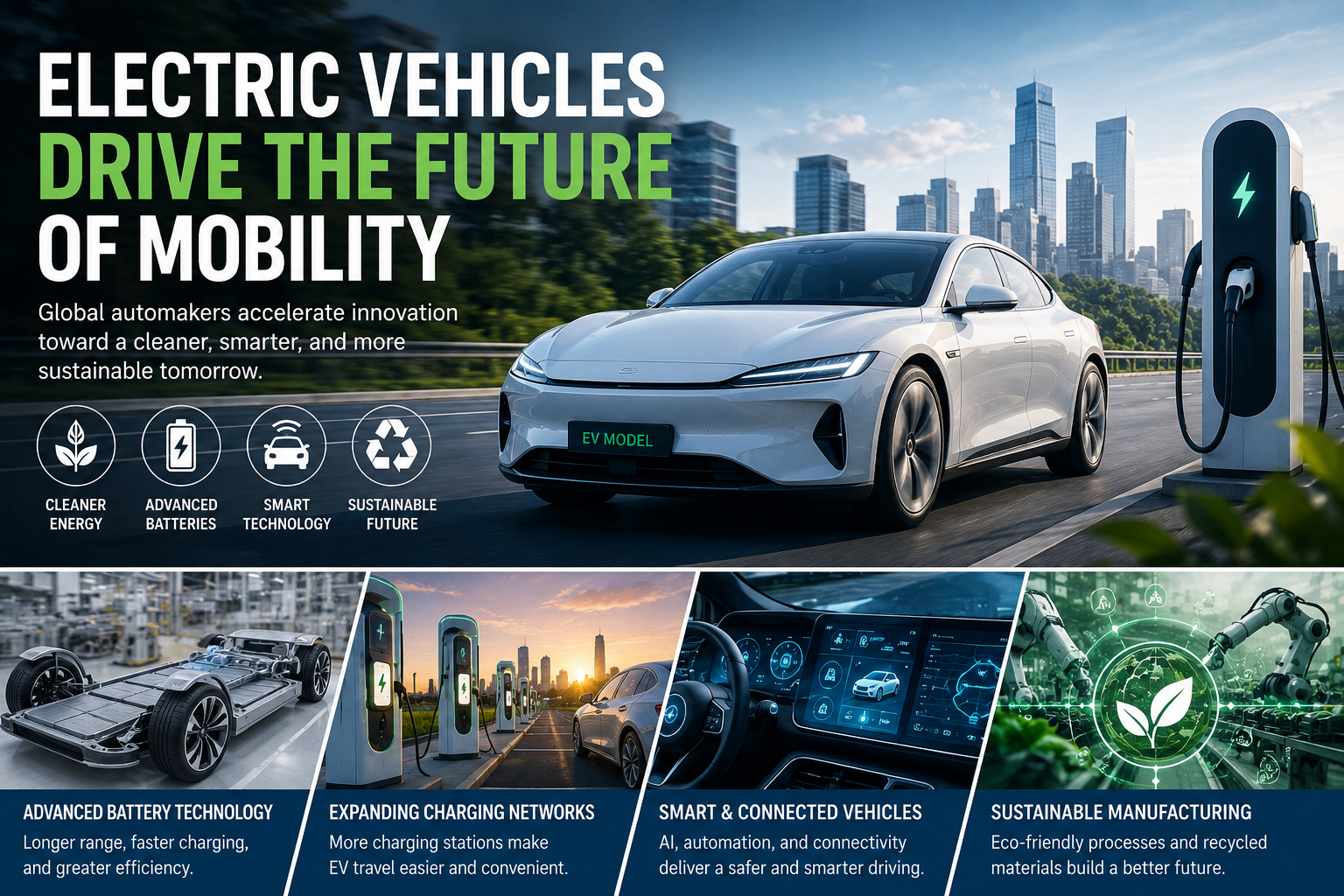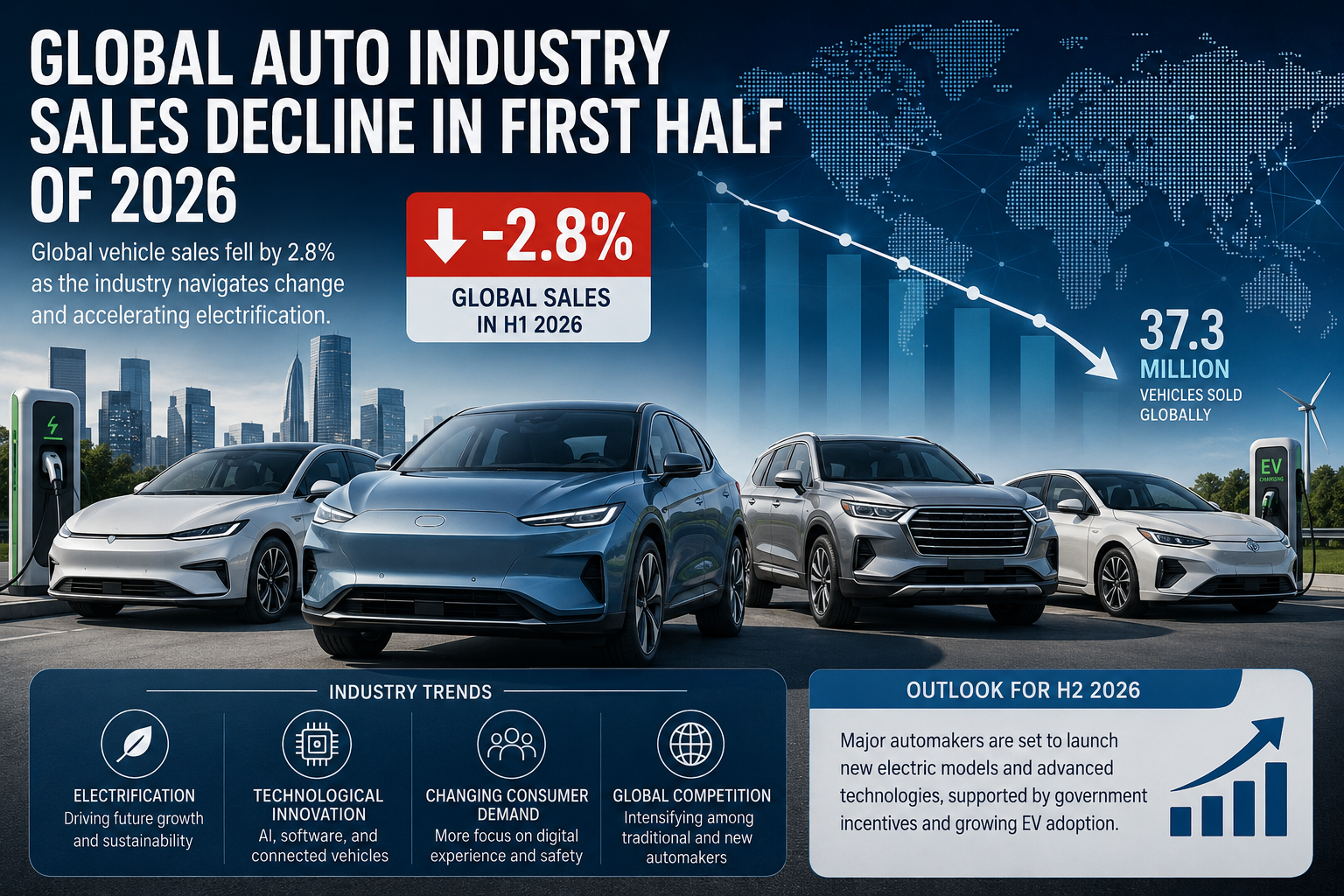
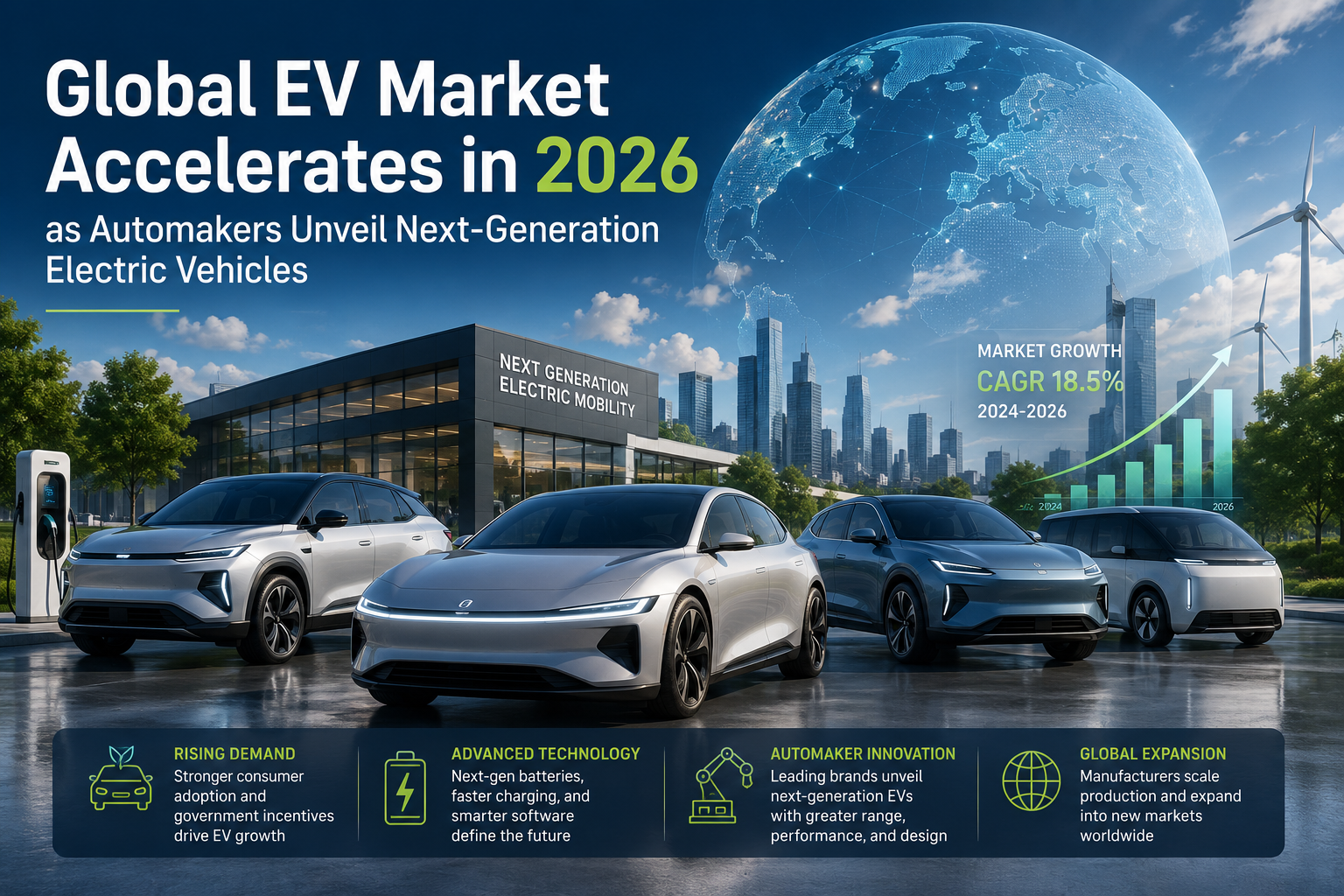
The global automotive industry is entering a new era of innovation as major manufacturers continue expanding their electric vehicle (EV) portfolios throughout 2026. Increasing consumer demand, stricter emissions regulations, and significant advances in battery technology are driving one of the largest transformations the automotive sector has experienced in decades.
Leading automakers are introducing vehicles equipped with longer driving ranges, faster charging capabilities, and more intelligent software systems designed to improve safety, efficiency, and the overall driving experience.
Electric Vehicles Continue to Dominate Global Automotive Trends
Electric vehicles remain the fastest-growing segment in the automotive market. Manufacturers across Asia, Europe, and North America are investing billions of dollars in research, production facilities, and charging infrastructure.
Industry analysts expect EV adoption to continue accelerating as battery costs decline and governments strengthen incentives aimed at reducing carbon emissions.
Improved Battery Technology Increases Driving Range
Battery innovation remains one of the industry’s biggest priorities.
Manufacturers are introducing new battery chemistries that offer:
- Longer driving range exceeding 700 kilometers on selected models
- Faster charging times
- Increased durability
- Enhanced thermal management
- Lower production costs
These improvements help reduce range anxiety, making electric vehicles more attractive to mainstream consumers.
Solid-State Batteries Gain Momentum
Several automakers are advancing solid-state battery development, a technology expected to deliver:
- Higher energy density
- Faster charging
- Improved safety
- Longer battery lifespan
- Reduced vehicle weight
Although mass production remains limited, experts believe commercial adoption will expand significantly over the next few years.
Artificial Intelligence Enhances Modern Vehicles
Artificial intelligence is becoming an essential feature in modern vehicles.
Automakers are integrating AI-powered systems capable of:
- Predicting maintenance needs
- Optimizing battery performance
- Enhancing driver assistance
- Improving navigation using real-time traffic data
- Learning driver preferences
These technologies aim to create safer and more personalized driving experiences.
Advanced Driver Assistance Systems Continue to Improve
Modern vehicles now feature increasingly sophisticated driver assistance technologies, including:
- Adaptive cruise control
- Lane-centering assistance
- Automatic emergency braking
- Intelligent parking assistance
- Driver monitoring systems
These systems contribute to reducing accidents while preparing consumers for future autonomous driving capabilities.
Charging Infrastructure Expands Worldwide
Governments and private companies continue investing heavily in charging infrastructure.
Thousands of new high-speed charging stations are being installed globally, enabling EV owners to recharge their vehicles in significantly less time than previous generations.
Ultra-Fast Charging Networks Become More Common
New ultra-fast charging technology allows compatible vehicles to recover hundreds of kilometers of driving range within approximately 15 to 20 minutes under ideal conditions.
The continued expansion of charging networks is expected to become a major factor influencing consumer adoption.
Sustainability Becomes a Core Manufacturing Strategy
Environmental responsibility now extends beyond vehicle emissions.
Automakers are implementing sustainable manufacturing practices, including:
- Recycling battery materials
- Reducing factory emissions
- Using renewable energy
- Increasing recycled materials inside vehicle cabins
- Developing circular manufacturing processes
These initiatives support global efforts toward carbon neutrality while improving corporate sustainability performance.
Recycled Materials Enter Premium Vehicle Interiors
Many manufacturers now incorporate recycled plastics, natural fibers, and eco-friendly fabrics into vehicle interiors without sacrificing quality or luxury.
Consumers increasingly value environmentally responsible products alongside performance and comfort.
Global Competition Intensifies
Competition among established automakers and emerging EV manufacturers continues to intensify.
Companies are differentiating themselves through:
- Software innovation
- Battery performance
- Vehicle connectivity
- Autonomous driving research
- Competitive pricing
- Subscription-based digital services
The race to lead the next generation of mobility is accelerating across every major automotive market.
Market Outlook for the Automotive Industry
Industry experts remain optimistic about long-term growth despite economic uncertainties.
Key factors expected to shape the automotive market include:
- Continued EV adoption
- Expansion of charging infrastructure
- AI integration
- Battery innovation
- Connected vehicle ecosystems
- Sustainable manufacturing
- Autonomous driving technologies
Manufacturers capable of combining technological innovation with affordability are expected to strengthen their competitive position over the coming years.